Tech debt intelligence
Tech Debtonator
AI to manage your tech debt.
A single place to inventory, score, and prioritize every system in your stack — so you know what to fix, what to keep, and where it hits the business.

overview
Turn your messy tech stack into clear priorities.
Instantly evaluate, rank, and act on tech debt across your entire organization with AI-powered scoring, reporting, and remediation guidance.
How it works
From Chaos to Clarity in A Day.
Step 1
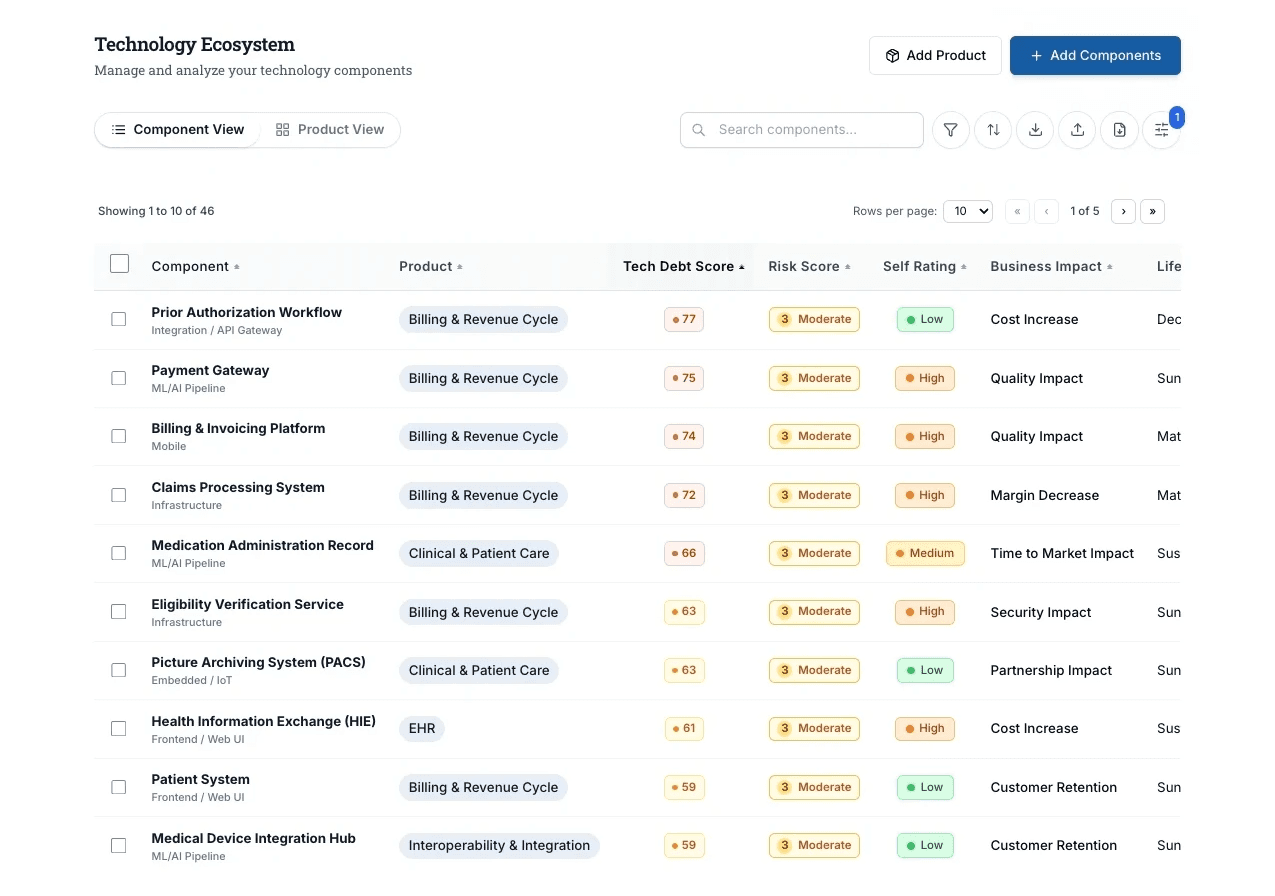
Inventory your stack.
Upload your tech debt spreadsheet or manually add components. Organize into product lines and get a unified registry of every system.
Components
Product Lines
Dashboard View
Step 2
AI automatically scores everything.
AI analyzes each component across age, criticality, complexity, lifecycle stage, and risk to generate an objective Tech Debt Score (0-100). You see every system ranked in one view.
Criticality
Complexity
Lifecycle Stage
Step 3
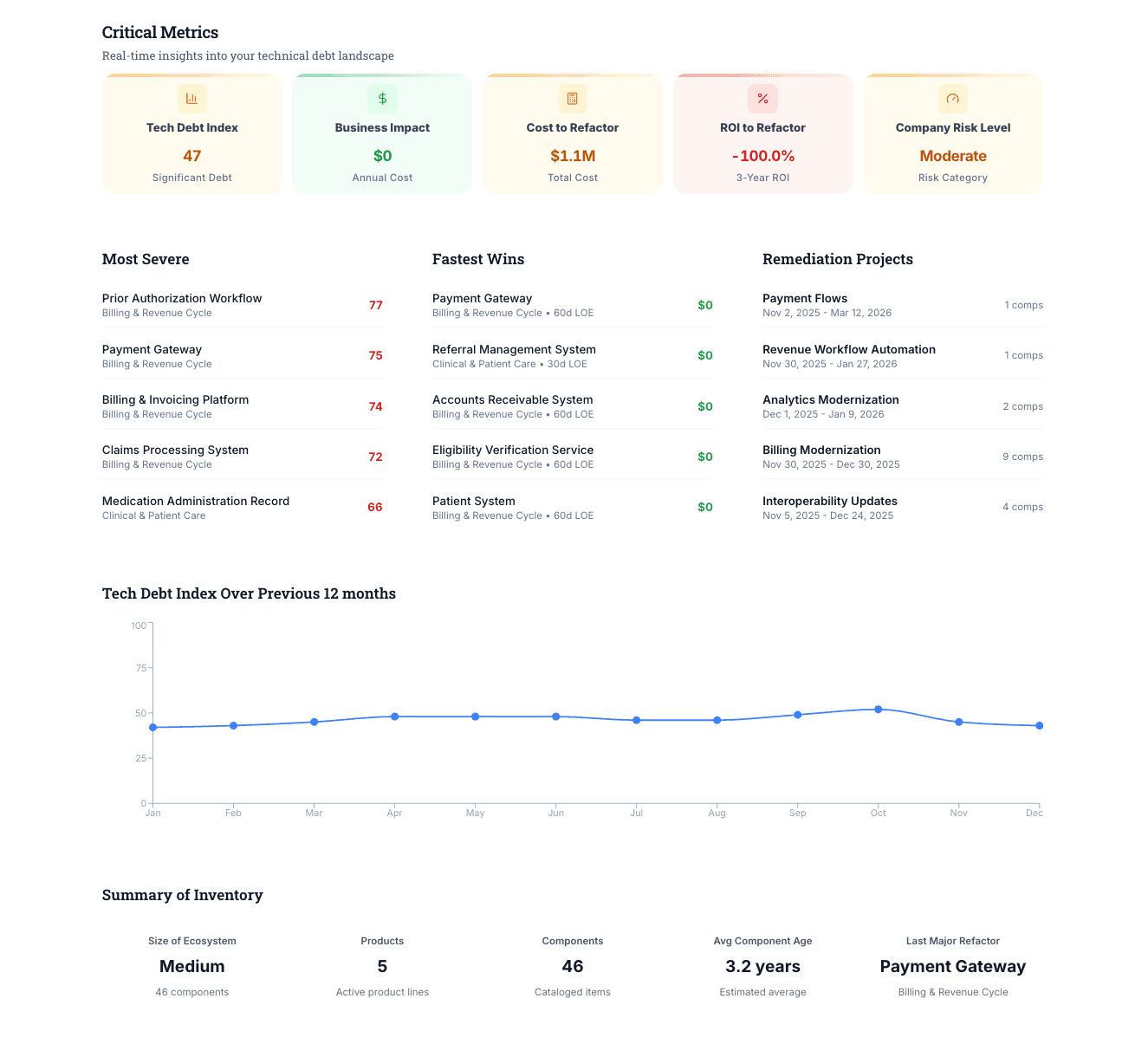
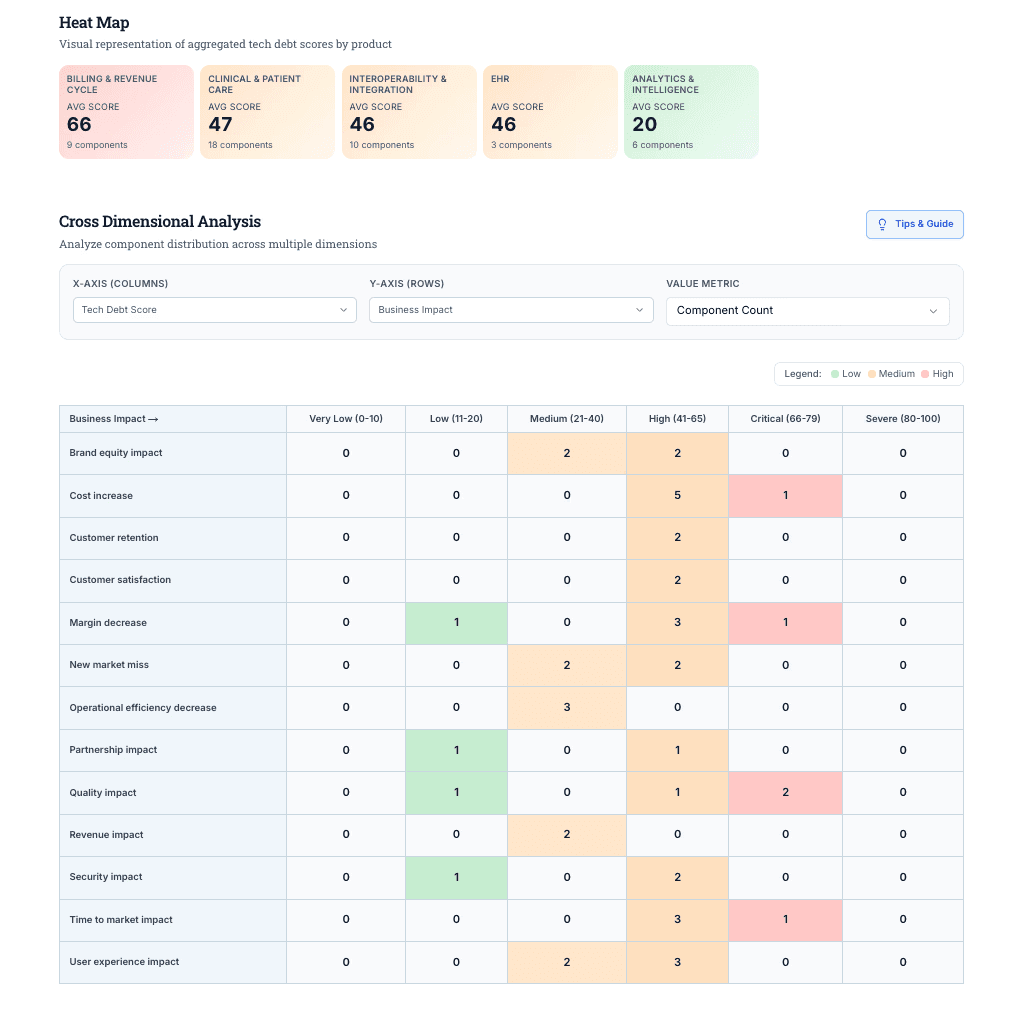
Map business impact.
Once you tag each component with its business impact, the system will generate a cross-dimensional analysis that shows which high-debt systems actually matter to the business.
Customer Retention
Quality Impact
Margin Implications
Step 4
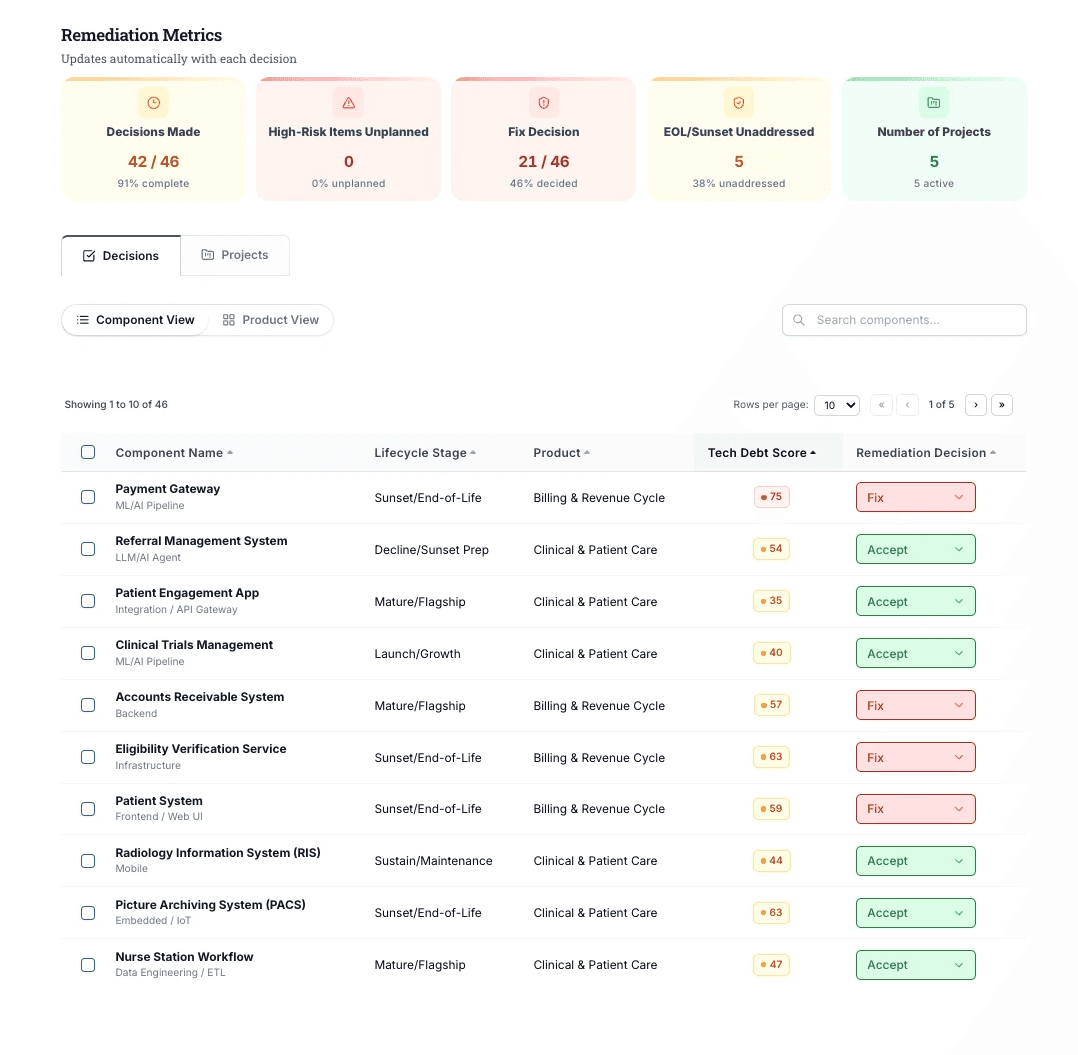
Build your remediation plan.
Use the Decision Engine to classify each component. Get a defensible roadmap showing what to tackle now, what to defer, and why.
Cost Ranges
Effort Levels
Target Delivery Dates
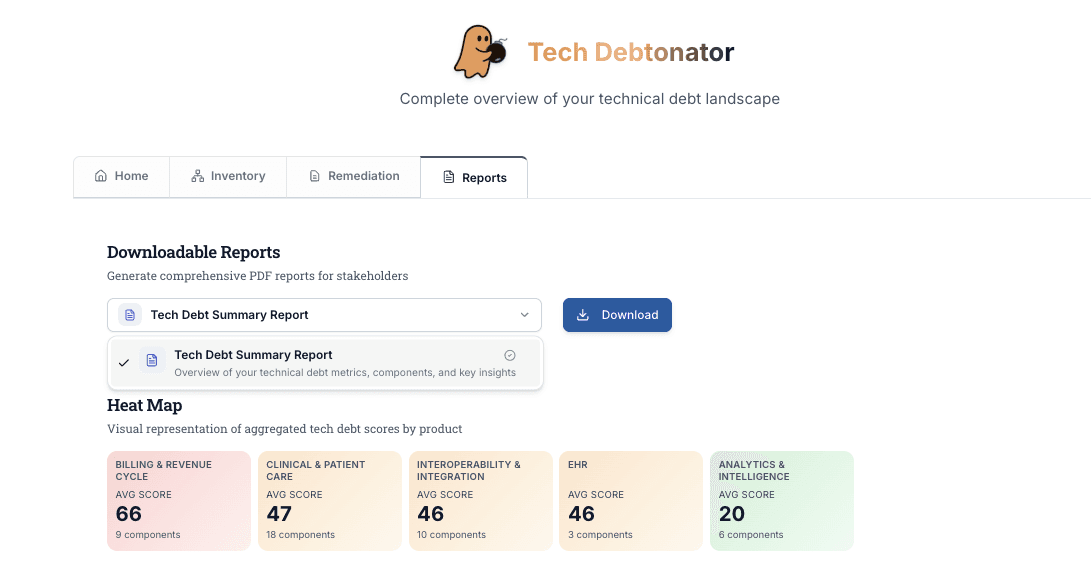
Step 5
Generate stakeholder reports.
Just choose your audience (CFO, CEO, Board) — Tech Debtonator auto-generates clean, downloadable reports that translate technical debt into risk, cost, and business impact.
CEO
CFO
Board
"I went from a scattered spreadsheet and no real system to a single, ordered view of my stack. Not only was setup easy — the process of staying on top of our tech debt has simplified tenfold."
SVP Technology, $550M HealthTech Company
benefits
Built for your highest-
stakes tech debt decisions.
From M&A due diligence to modernization planning and ongoing governance, Tech Debtonator gives you objective scores, business impact, and a concrete remediation plan.

M&A Due Diligence
Quickly inventory target stacks, surface hidden legacy systems, and quantify modernization liability.

Modernization Planning & ROI
Score every component and sequence work by risk, cost, and impact for a defensible roadmap.

Executive-Ready Reports
Get a live portfolio view, spot emerging hotspots, and standardize remediation decisions.

Metrics-Based
Turn tech debt into clear metrics that support investment, headcount, and roadmap decisions.
Pricing
Start free with a 21-day trial. Or get unlimited access for only $55/month, with regular feature updates and improvements.
21-Day Trial
Free
Inventory and score your tech stack.
Explore AI recommendations and remediation plans.
Generate executive-ready reports for your current snapshot
Unlimited Use
Access to updates
Start Free Trial
Tech Debtonator Unlimited
$55 per month
Unlimited components, workspaces, and scoring runs
Continuous portfolio monitoring and trend analysis
Full access to remediation decision engine and reporting
All feature updates and improvements included
Priority email support from experienced engineering leaders
Subscribe Now
Start free when you sign up for Tech Debtonator now.


©2025 Copyright EBTN, Inc.

Features
Everything you need to see, score, and fix your tech debt.
Tech Debtonator builds a unified inventory of your stack, scores every component with proprietary AI, and turns the results into clear remediation decisions.
AI-Powered Scoring
Automatically score debt based on factors like age, criticality, complexity, and lifecycle, for you an objective tech debt index.
Unified Tech Stack Inventory
Pull every system into a single, authoritative registry (so everyone can finally agree on what’s actually in your stack).
Intelligent Grouping
Organize components into custom groups to instantly see where debt clusters, what’s strategic, and where risk is concentrated.
Remediation Decision Engine
Use AI-backed recommendations to decide whether to accept, monitor, bundle, remediate - or even keep - individual components.
Executive-Ready Reports
Generate clean, shareable reports that translate technical detail into risk, cost, and business impact leaders can understand.
Portfolio-Level Prioritization
Rank tech debt across the entire portfolio so teams focus on the few changes that move risk, cost, and reliability the most.